
米食~好食!米食文化 畫米食
節慶的米食饗宴


目錄
一、開學了!米香開爆了!
二、三朝洗兒油飯香
三、中元節鹹芋粄
四、中秋粢粑軟Q香
五、大暑綠豆米苔目
六、臘月初八八寶粥
七、粽葉飄香慶端午

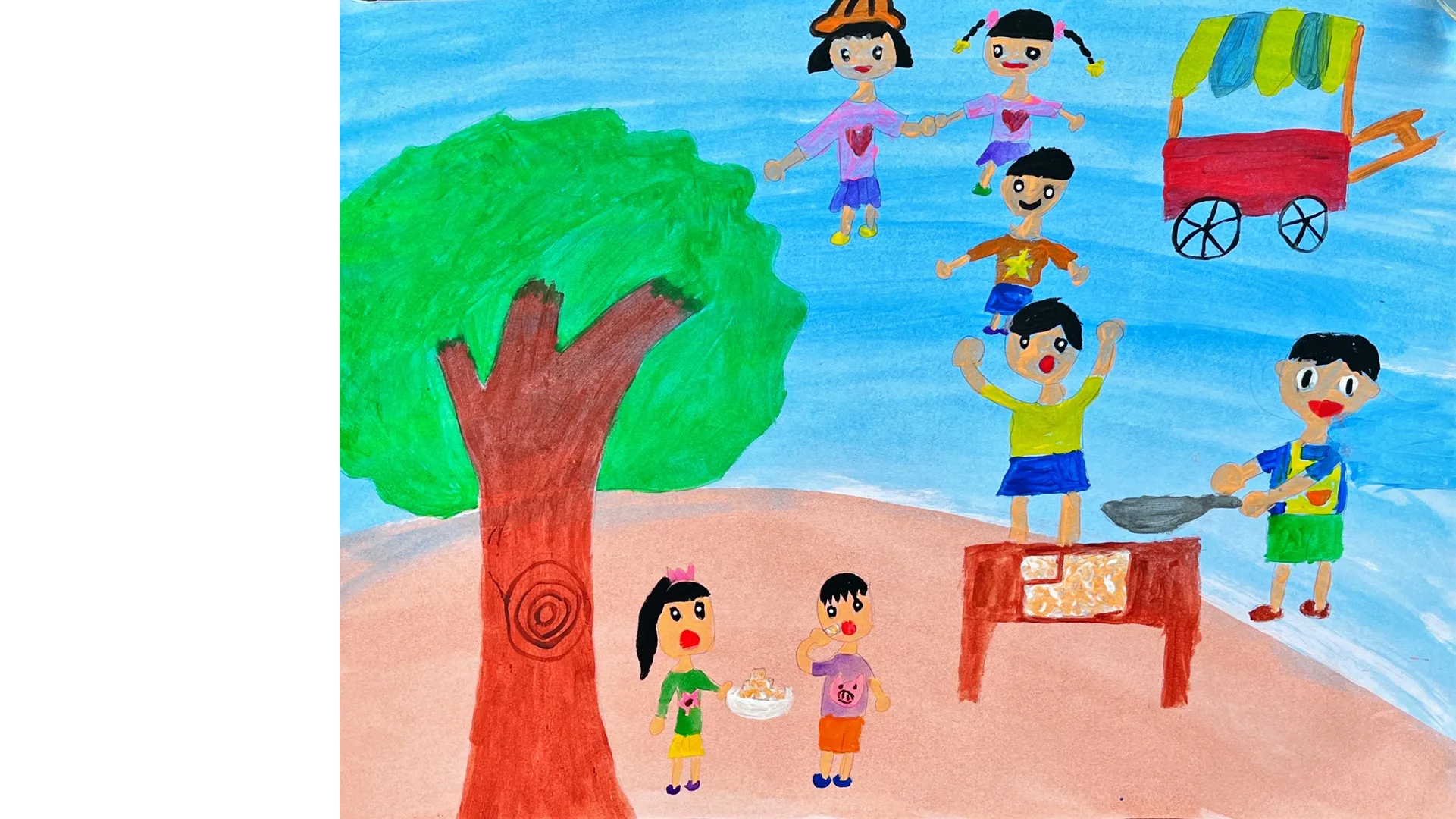
一、開學了!~米香開爆了!
New school year has started. Poprice is popping!
開學了!
哇!今天學校好熱鬧啊!有爆米香的行動車耶!
社區的阿公、阿婆們,都來跟我們一起爆米香🌾
New school year has started.
Look at that! It is super crowded at our school today. There is a poprice truck!
Folks and elders from the community are also here to pop with us.


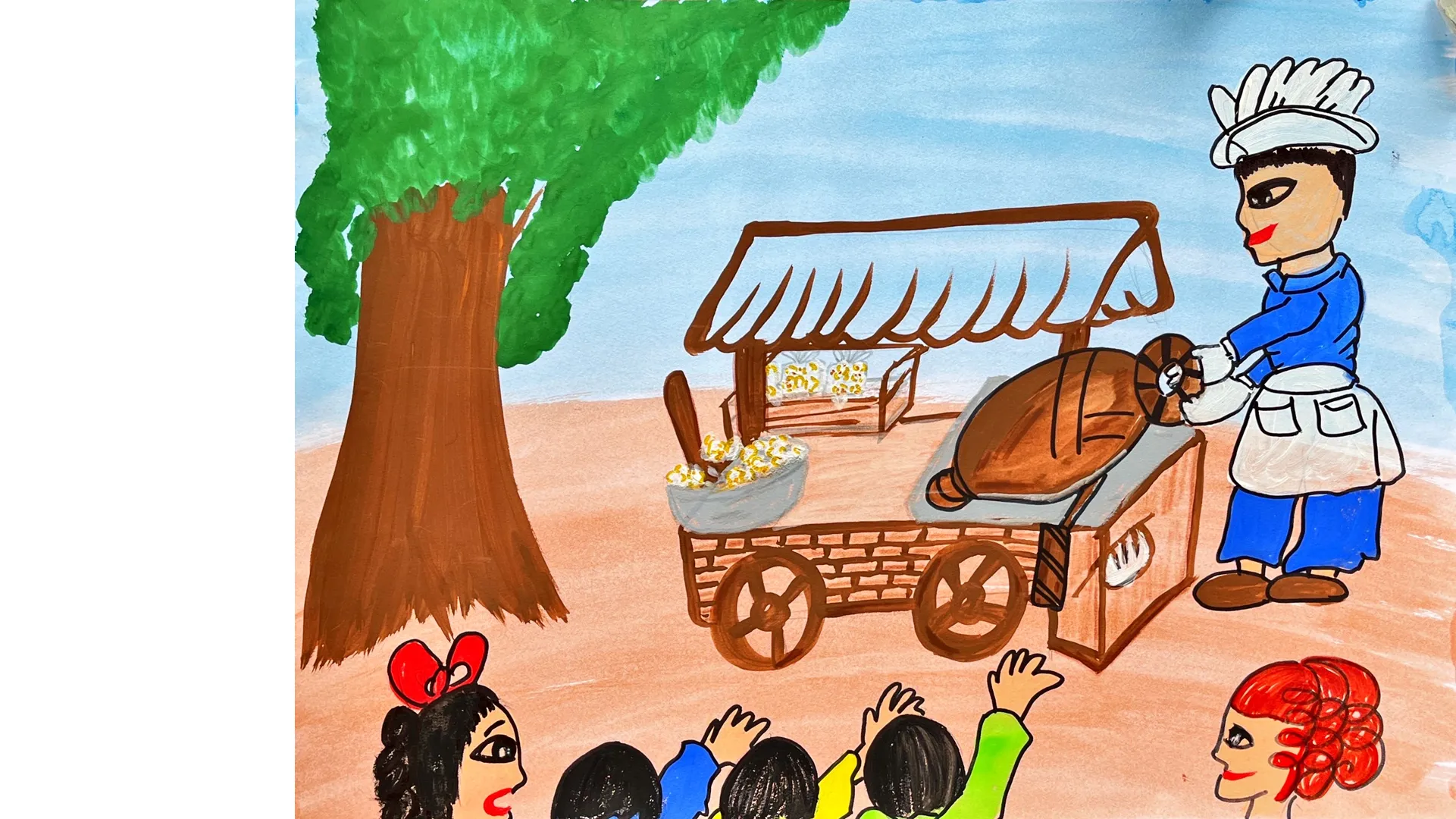
白米是今天的主角喔!🌾
也可以加上花生、芝麻、紫米……
Rice is the highlight today!
You can also add peanuts, sesame seeds, purple rice, etc…
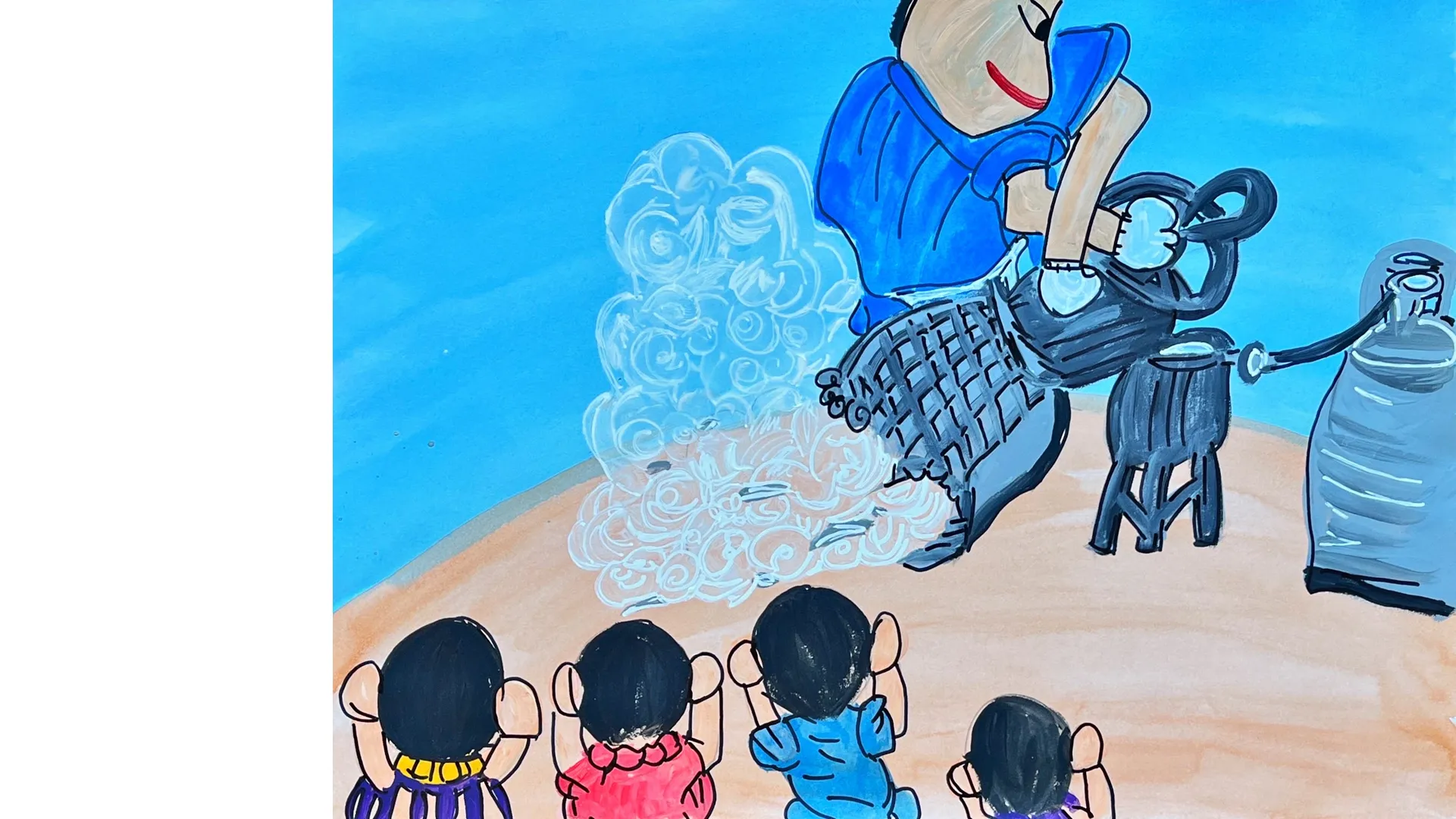
放進爐子了!好期待喔!
【要爆囉!】老闆大聲提醒🧑🍳
我摀住耳朵……嚇得不敢動……
 哇!米粒變大了耶!
All in the boiler! Can’t wait to see the popper go!
"The popping is about to start!" the poprice maker loudly reminds us.
I cover my ears... I'm too scared to move...
Boom! Wow! The rice kernels are getting bigger!
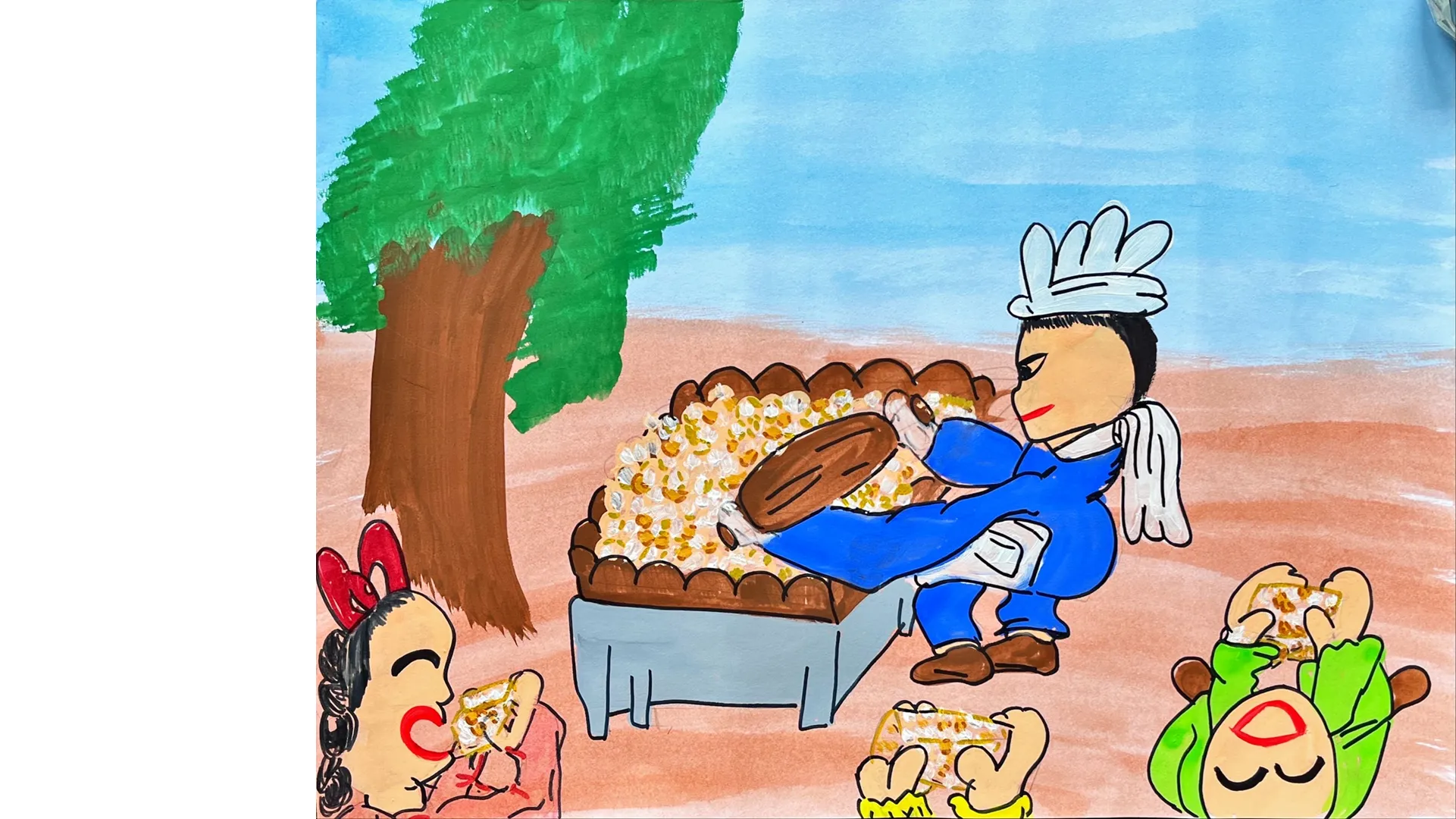
倒入糖漿 快速攪拌 再倒入板模鋪平 切成小塊
大口咬下去 嗯~~好香!好脆!好~好~吃喔!😋
Pour in the syrup, stir fast, then pour into the mold and flatten it. Cut into small pieces.
Take a big bite... Mmm~~ smell good! So crispy! So yummy!
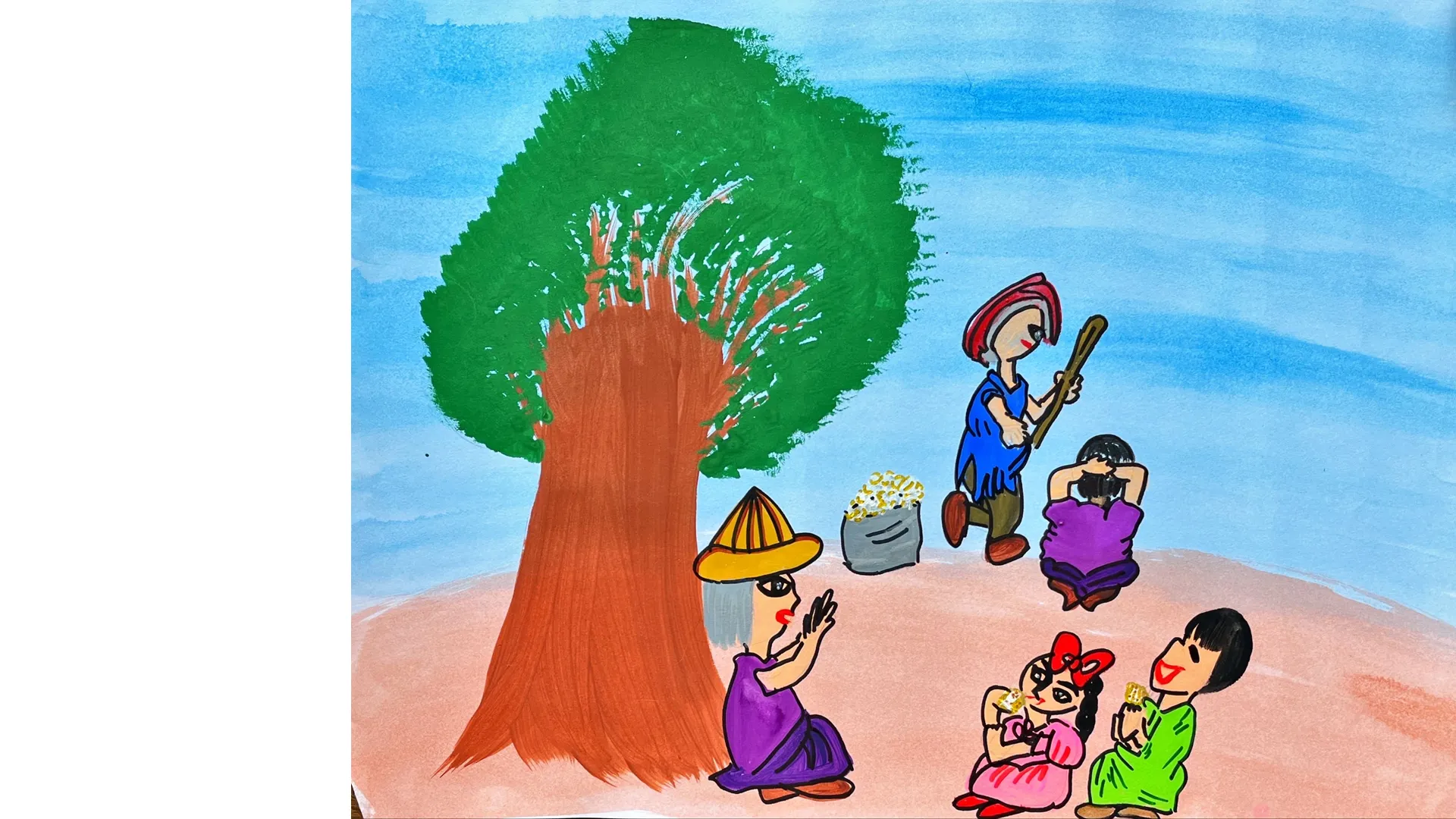
我們一起坐在大樹下🌳
阿婆說她小時候偷拿一罐白米去請師傅爆米花
結果回家被媽媽修理的兒時趣事🧹
We sat together under the big tree.
Grandma told us about how she stole a can of white rice one time when she was a kid, to ask the poprice maker to make poprice.
She went home and got scolded by her mother - - a funny story when she was a kid.
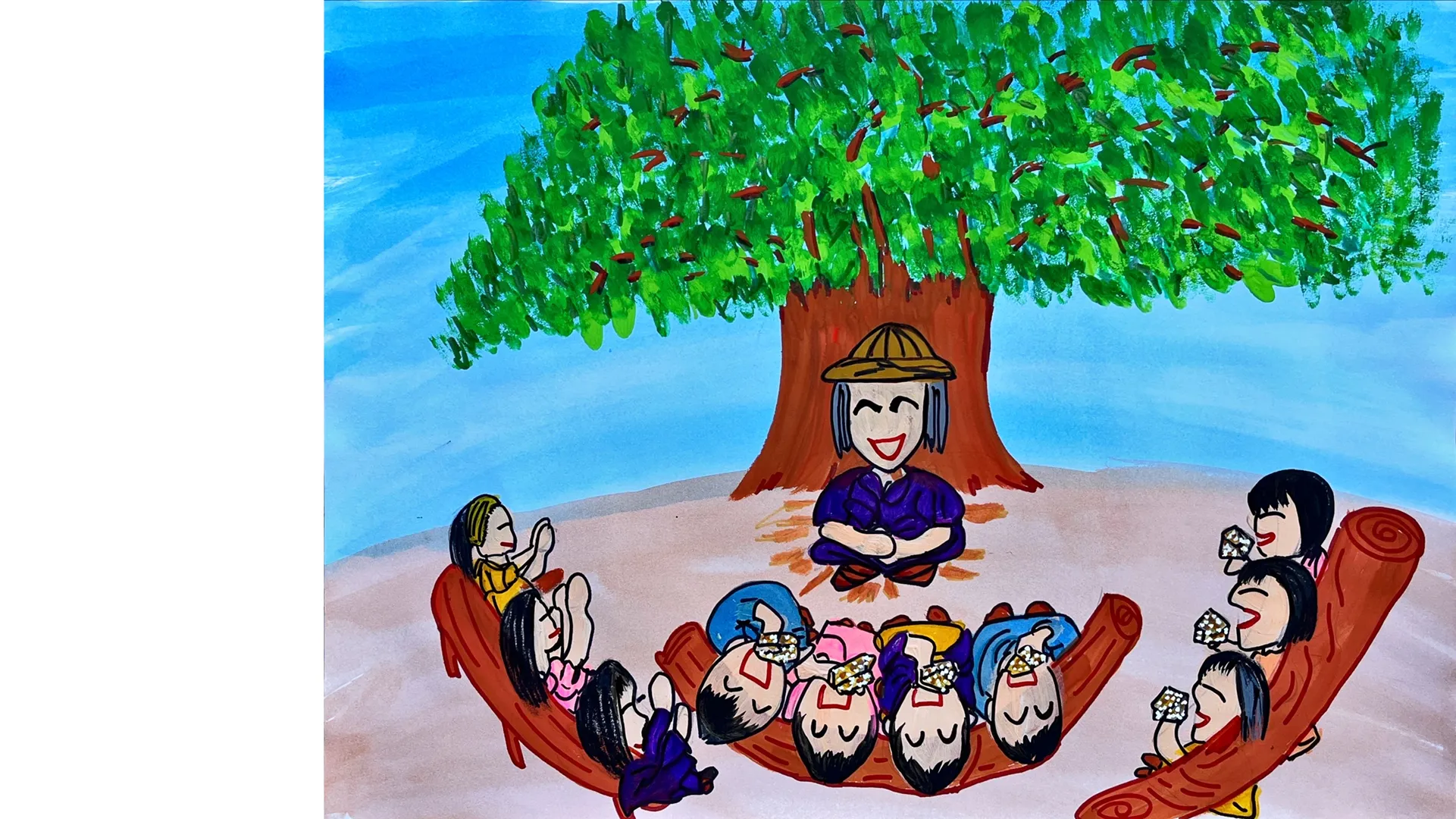
吹著 涼涼的風🍃
吃著 香甜酥脆的爆米香
聽阿公 阿婆們回憶兒時點點滴滴……
~~爆米香 好好吃!😋
Blowing with the cool wind, eating the sweet, good smell and crispy poprice,
Listening to grandpas and grandmas thinking about their childhood memories...
~~~ poprice, yum yum yum!
🌾感謝收看🌾
下一章,三朝洗兒油飯香
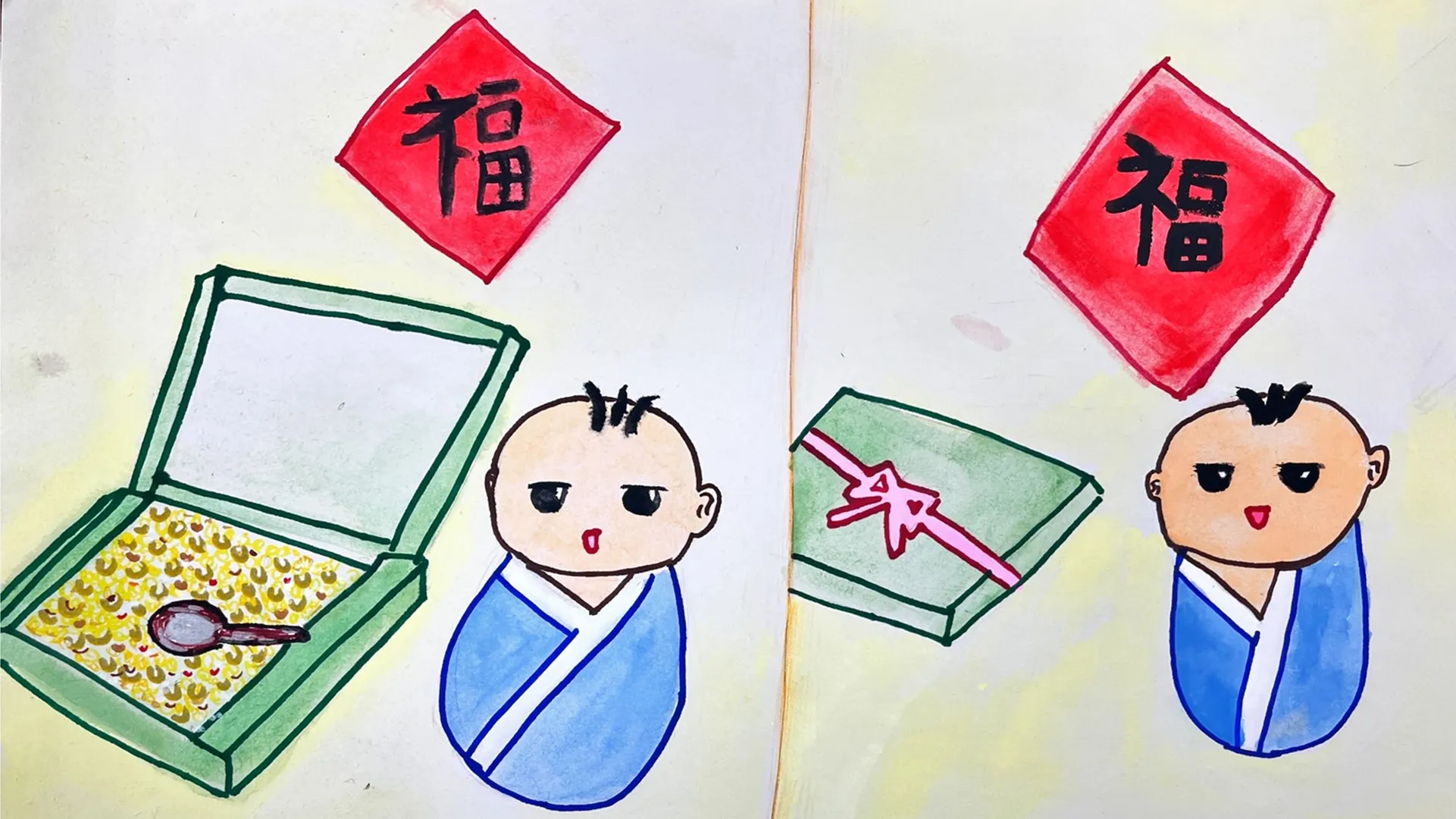
二、三朝洗兒油飯香
Delicious Oil Rice Celebrating Three-Day-Old Baby Bath
傳統習俗中,嬰兒出生三天,👶
要請產婆到家中替嬰兒洗澡,稱為「洗三朝」。
In traditional Taiwanese customs, when a baby is born,
the midwife is invited to the home to bathe the baby on the third day.
This custom is called "Three-day-old Baby Bath”.

有人會在浴盆內放三塊小圓石,以及12枚舊銅錢。🪙
小圓石象徵嬰兒頭好壯壯,做事圓融;
錢幣則希望嬰兒未來一生有錢財。
這些都是家人對嬰兒健康成長的期望與祝福。
Some families place three small round stones and twelve old copper coins
in the bathtub during the ceremony.
The stones symbolize that we hope the baby to be smart, strong, and harmonious in life,
and the coins are meant to wish the baby financial prosperity throughout life.
These are the family's expectations and blessings for the baby's healthy growth.
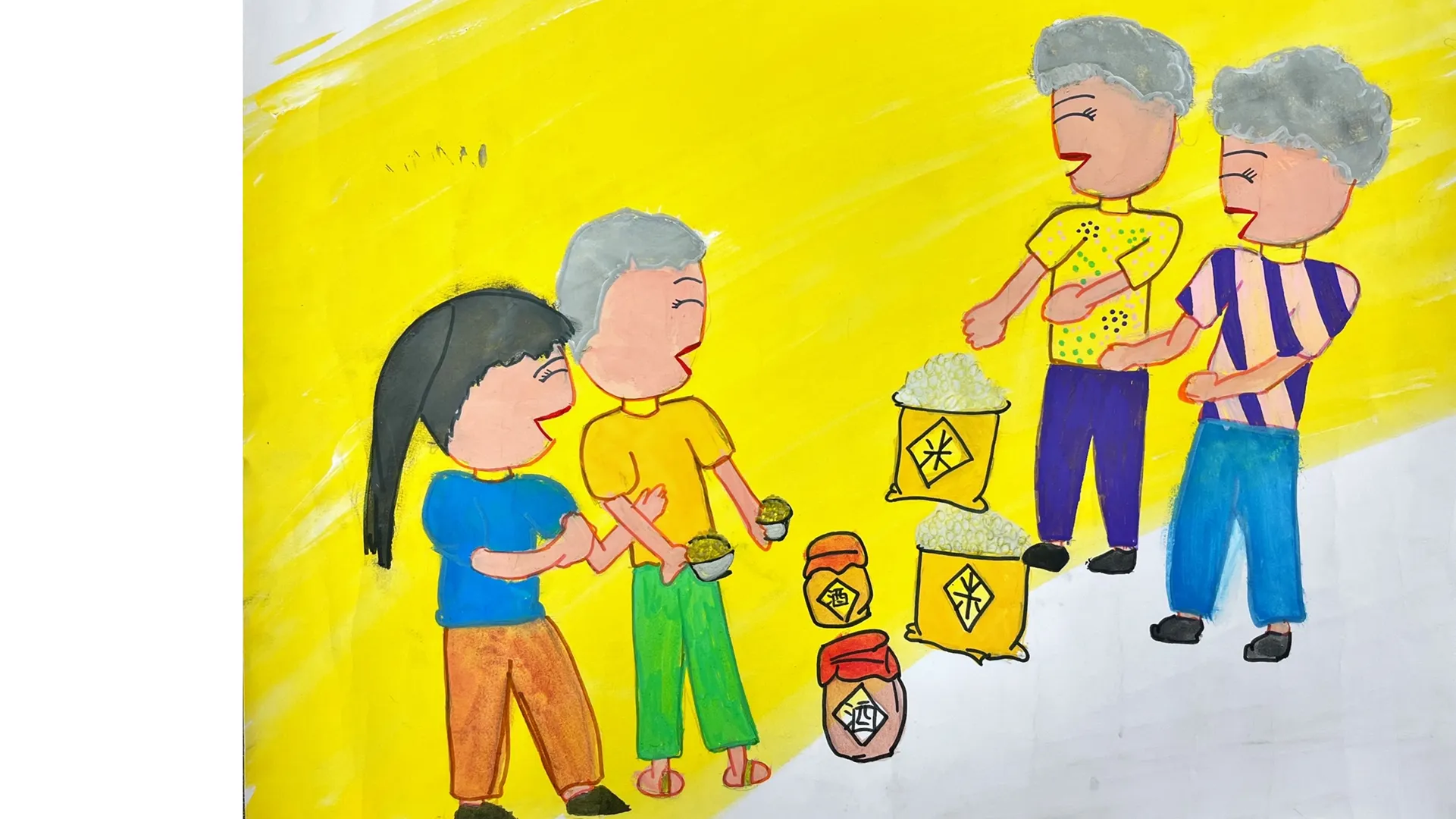
然後將供拜後的雞酒、油飯,送至嬰兒母親的娘家,
報告外祖父母他們有了外孫的喜訊,稱為「報酒」。🍶
同時,也要將雞酒、油飯分送給左鄰右舍。鄰居們也會回贈少許白米作為回禮。
The offerings such as the sesame oil chicken soup and oil rice will be taken to the baby's mother's parents' home
to tell them the happy news about their grandchild.
The grandparents would share the sesame oil chicken soup and oil rice with their neighbors
and the neighbors would also give some white rice as a gift in return.
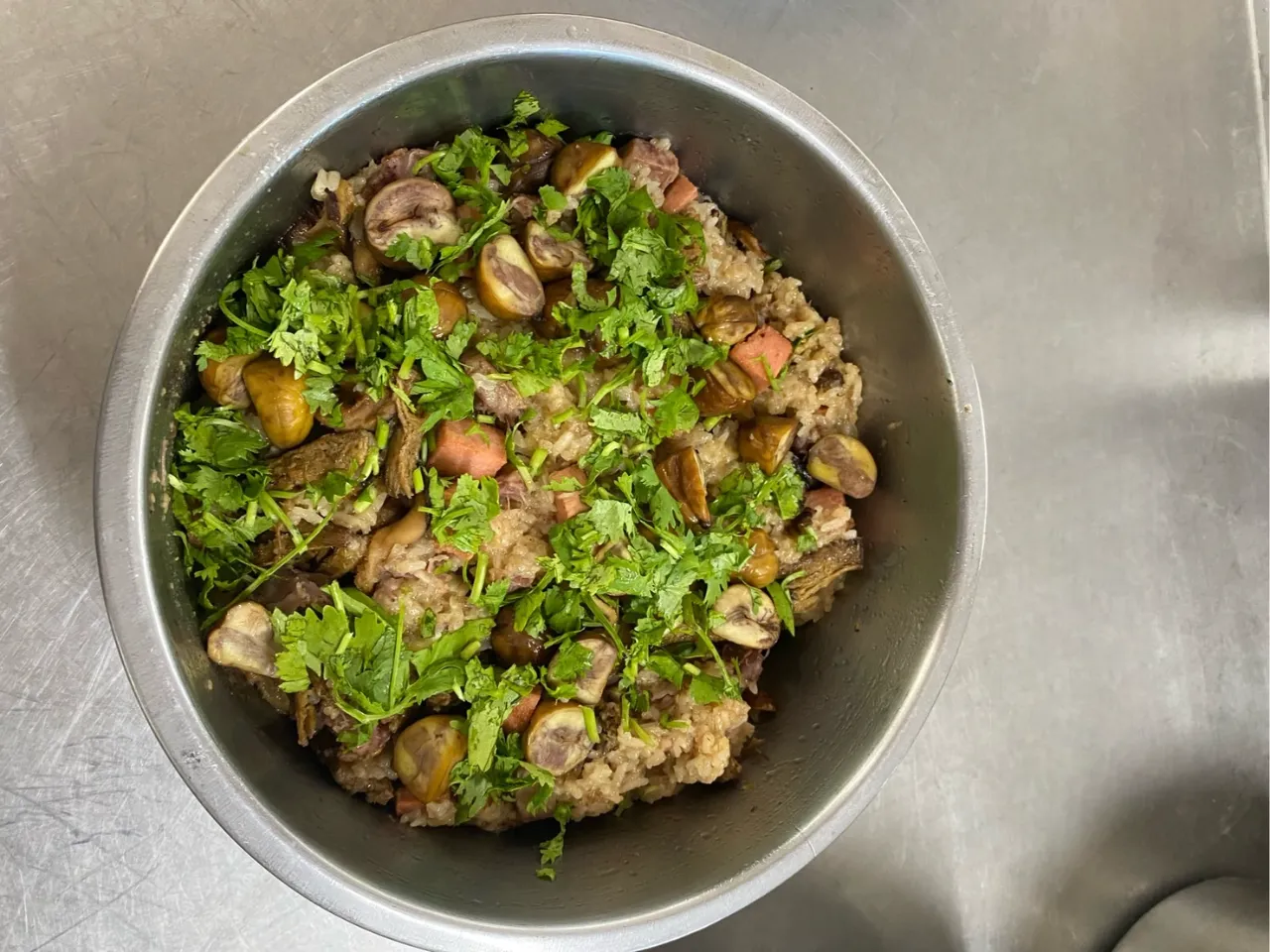
油飯,是台灣傳統的米食料理。
主角常是以蒸熟的長糯米,拌入炒香的佐料。🧅🦑🦐
佐料常見的有肉絲、香菇、紅蔥酥、乾魷魚、蝦米……等等,並以麻油及醬油調味。
Oil Rice is a traditional Taiwanese rice dish.
The main ingredient is typically steamed long-grain glutinous rice,
mixed with stir-fried ingredients such as shredded meat, shiitake mushrooms,
crispy shallots, dried squid, dried shrimp, and more, all seasoned with sesame oil and soy sauce.

吃上一口香噴噴的油飯,
了解家人從嬰兒一出生給予的關愛,也認識中國米食的文化。
雖然現在嬰兒滿月大多數會贈送彌月蛋糕取代油飯,
但是滿月油飯的文化,仍是中國濃濃人情味的最佳代言。👨👩👧👦
Eating a tasty bite of oil rice helps us understand the love and care a family has shown since we were born.
It also let us understand the culture of Chinese rice food.
Although nowadays, many families give full month cakes instead of oil rice for a baby's completion of its first month of life,
the culture of oil rice remains the best endorsement of the Chinese hospitality and warmth.
🍚感謝收看🍚
下一章,中元節鹹芋粄
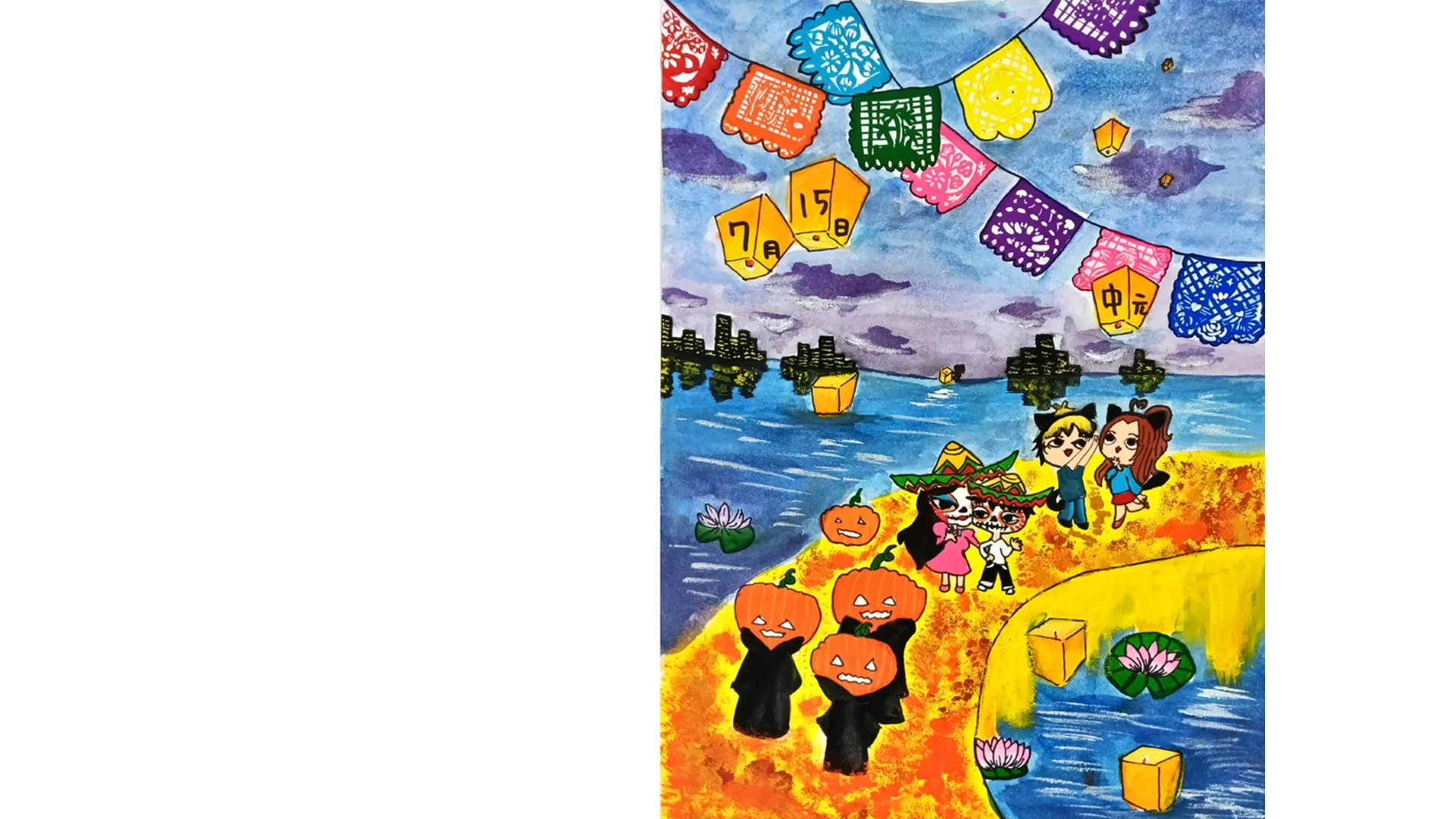
三、中元節鹹芋粄
Salty Taro Cake for Ghost Festival
農曆7月15日是台灣民間習俗所稱的「中元節」,
中元節是歷史悠久的傳統節日。除了台灣和中國以外,
馬來西亞、越南、新加坡、印尼等國家也都有相關的活動。
People in Taiwan celebrate “Hungry Ghost Festival” on July 15th of the lunar calendar.
It’s the traditional holiday with a long history.
Many countries, including Malaysia, Vietnam, Singapore, and Indonesia, also have related celebrations.
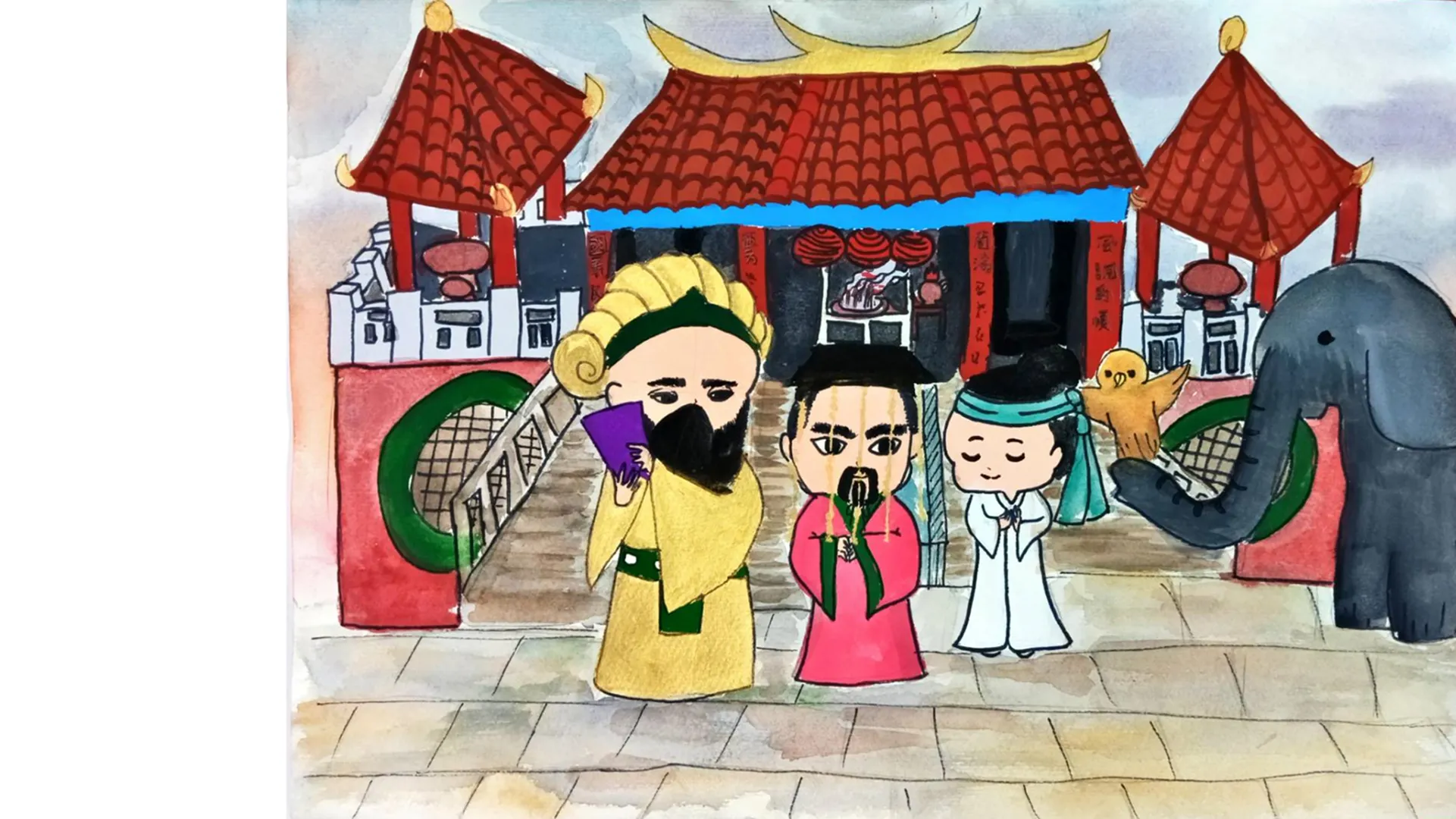
相傳在古代,有一個叫「舜」的人,孝心和德行感動了上天,
還被封為「地官大帝」!🫅
相傳舜的生日是在農曆7月15日,因此這天又有「孝子節」之稱。
這天包含著孝心、解救無形眾生苦難、祈求赦免罪過等等多重意涵,因此形成中元普渡的傳統。
Long ago, there was a man, "Shun", whose filial piety and virtues touched the heavens.
He was honored as "Di Guan" (The God of the Land )!
It is believed that Shun's birthday is on the 15th day of the 7th lunar month,
so the Ghost Festival is also called the “Filial Son’s Day”.
The meaning of this day is to show respect to parents, helping the suffering souls,
praying for forgiveness,and so on, thus forming the tradition of Zhongyuan Purdu.

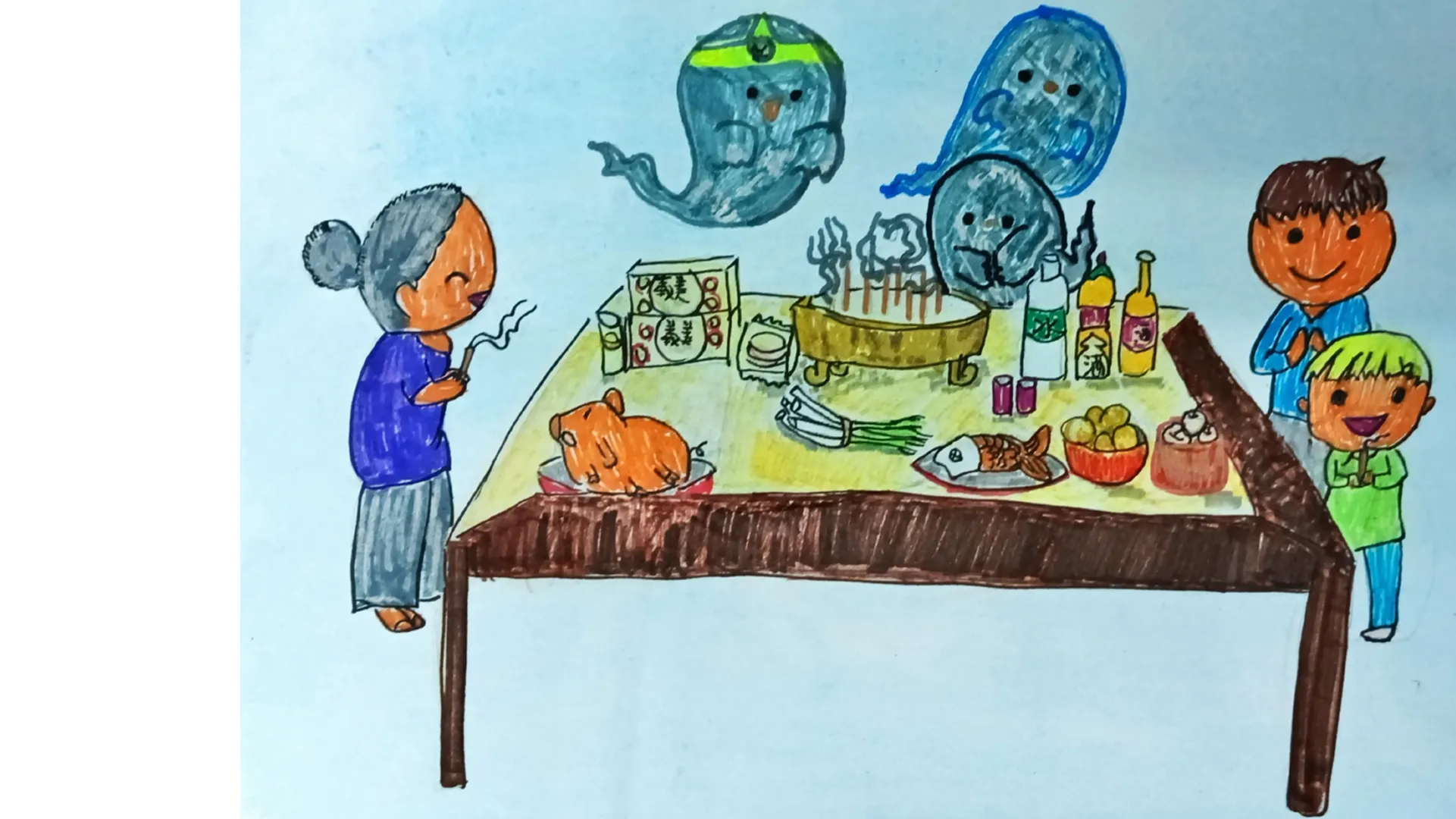
人們會在這天準備豐盛的酒肉祭品祭拜,🍶🥩
為自己和祖先祈求平安順利、同時祭拜沒有人盡孝的孤魂野鬼。👻
這也是中元普渡和農曆七月好兄弟的說法之一!
On this day, people prepare rich offerings of wine and meat for ancestors and wandering spirits,
praying for peace and prosperity as well.
This is one of the folk saying for “Zhongyuan Pudu” and "Good Brothers,
ghosts" in the Seventh Lunar Month!
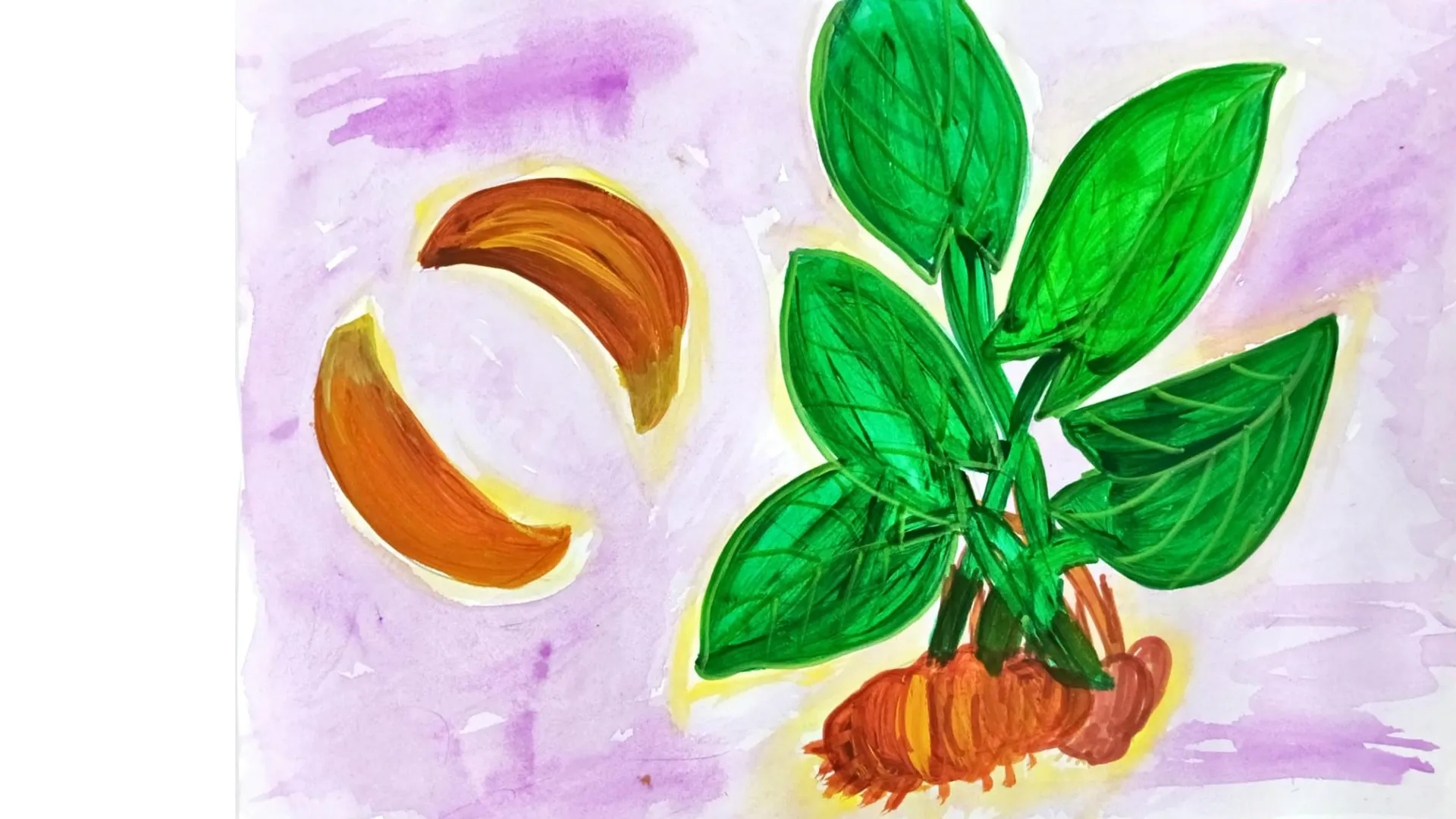
七、八月剛好是芋頭盛產時節,在南部六堆地區的客家人,
會利用當令盛產的芋頭加上糯米,做成好吃的點心,🍠🍚
後來也演變成為中元節祭祀好兄弟的最佳供品。
July and August is the peak season for taro. In the Liudui regions of southern Taiwan,
Hakka people use the bountiful taro in season and sticky rice to make delicious snacks called “Taro Cake!”
Later, it has become the best offering for wandering spirits on Ghost Festival.
讓我們一起動手製作【芋粄】吧!🥧
How about making “Taro Cake” together? Come and join us!
🥧感謝收看🥧
下一章,中秋粢粑軟Q香
四、中秋粢粑軟Q香
Mid-Autumn Festival: Soft, Chewy, and Fragrant Ciba/ Mochi
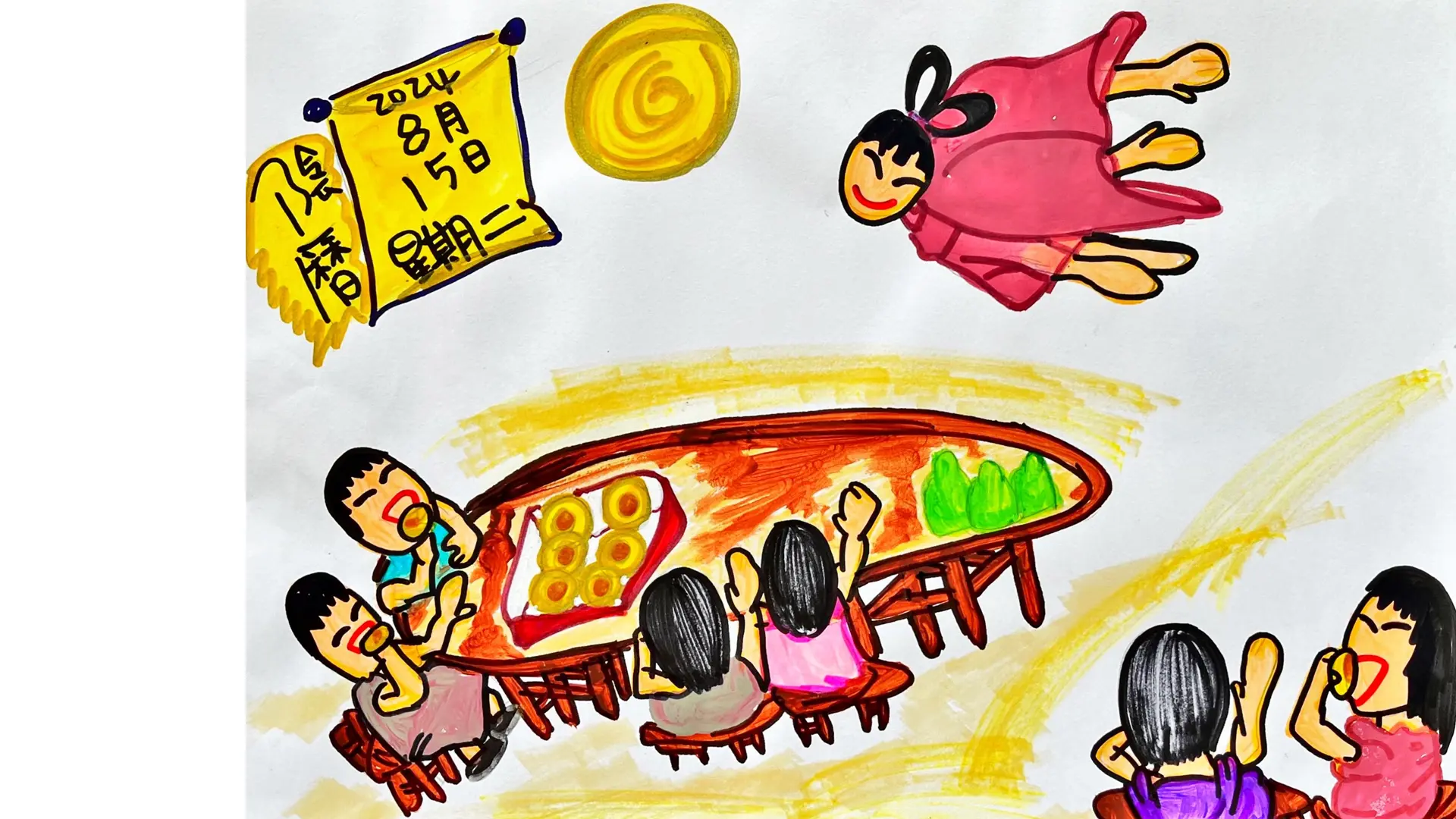
中秋節,是每年的農曆八月十五。🌕
提到中秋節,大家都會想到《嫦娥奔月》這個故事。
吃月餅、吃柚子、全家團圓賞月,都是我國民間的傳統習俗。🎑
此外,「粢粑」也是客家人中秋節的應景食品。
The Mid-Autumn Festival falls on the 15th day of the 8th month of the lunar calendar.
During the Mid-Autumn Festival, people think of the story of 'Chang'e Flying to the Moon.'
We celebrate this day in many ways, such as eating mooncakes, pomelos, and watching the moon together.
Additionally, Ciba/ Mochi is a traditional food for the Hakka people during this festival.
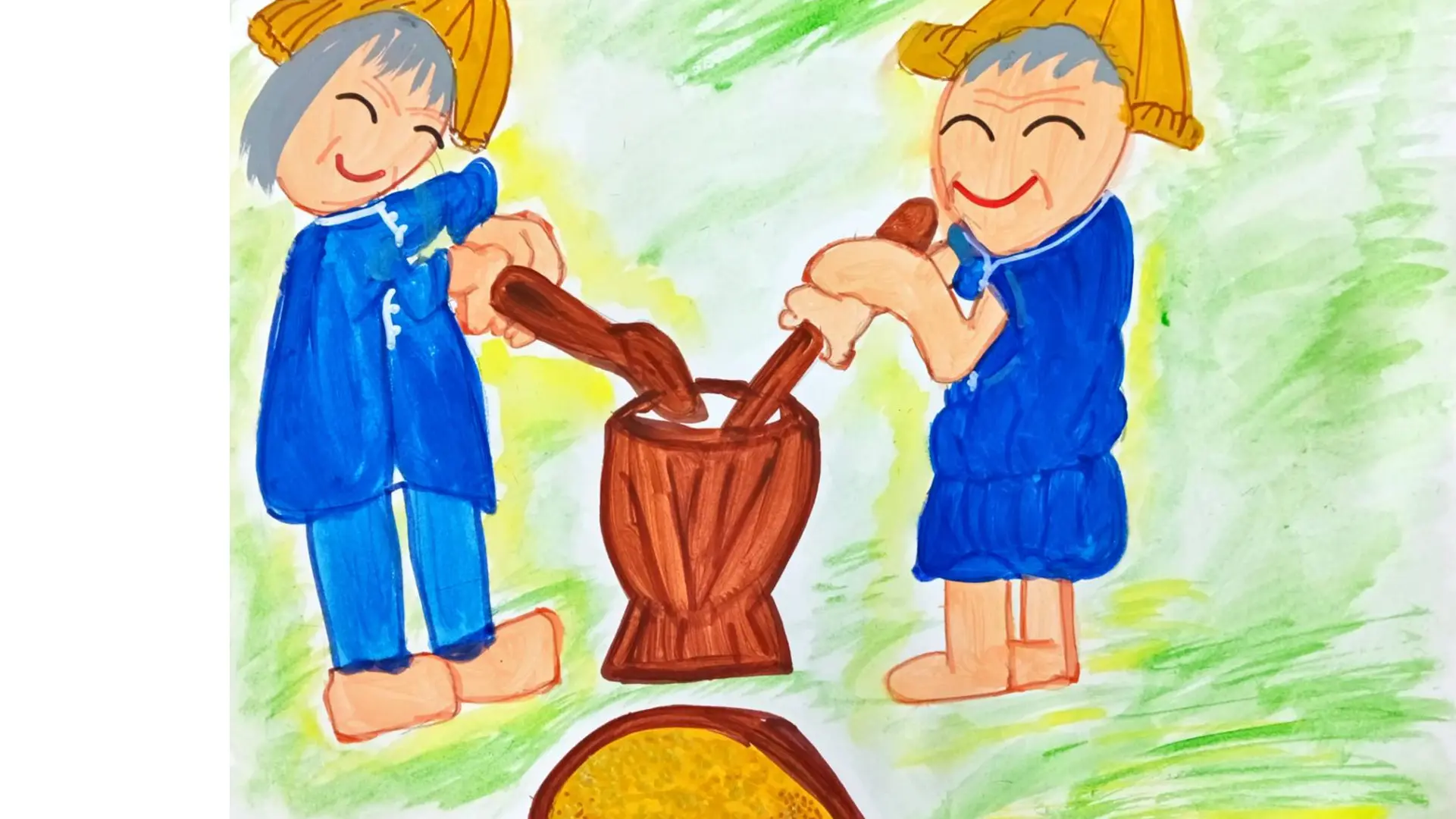
「打粢粑」讓親朋好友齊聚一堂,製造生活的樂趣。
將蒸熟的糯米飯搗勻,裹上花生粉、糖粉,就變成臺灣客家最受歡迎的點心。
糍粑大多會捏成圓形的,而圓形也代表著團圓。
Making Ciba / Mochi brings family and friends together, creating joy in life. Now, let’s talk about how to make “Ciba/ Mochi!”.
First, the cooked glutinous rice is pounded until smooth and then coated with peanut powder and sugar.
There you have it: the most popular and beloved snack among the Hakka people in Taiwan.
Ciba/ Mochi is usually shaped into a round form, which represents reunion and togetherness.
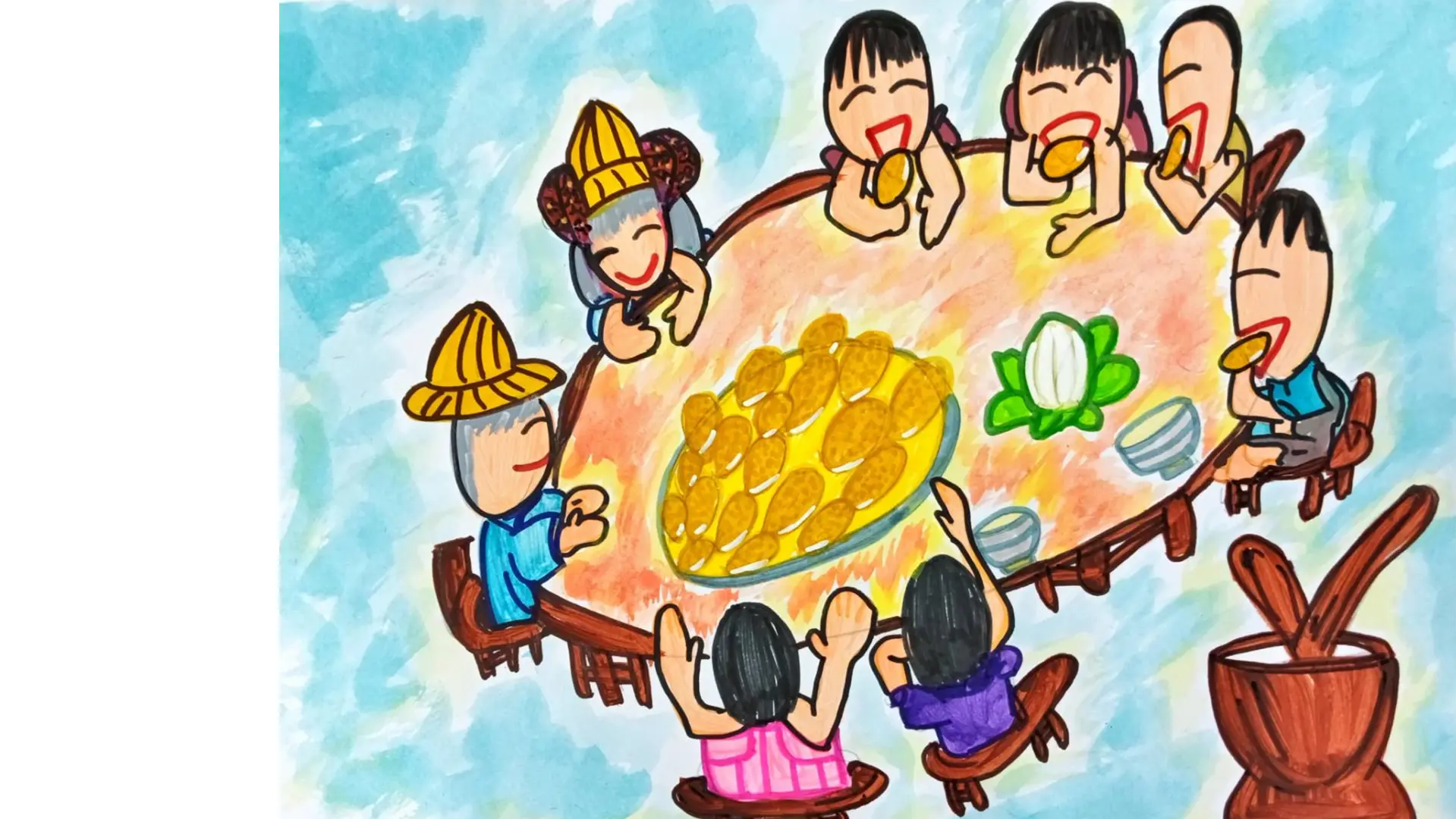
中秋節是傳統的團圓的節日,所以在這一天家家戶戶合力製作糍粑,👨👩👧👦
大家圍坐一起品嘗粢粑,感受家庭團圓、全家歡樂的氣氛,也祈求人生的圓滿。
Mid-Autumn Festival is a traditional holiday for family reunions.
On this day, everyone makes rice cakes(Ciba/ Mochi) and gathers to enjoy them,
feeling the joy of family togetherness and wishing for a fulfilling life.
感謝收看
下一章,大暑綠豆米苔目
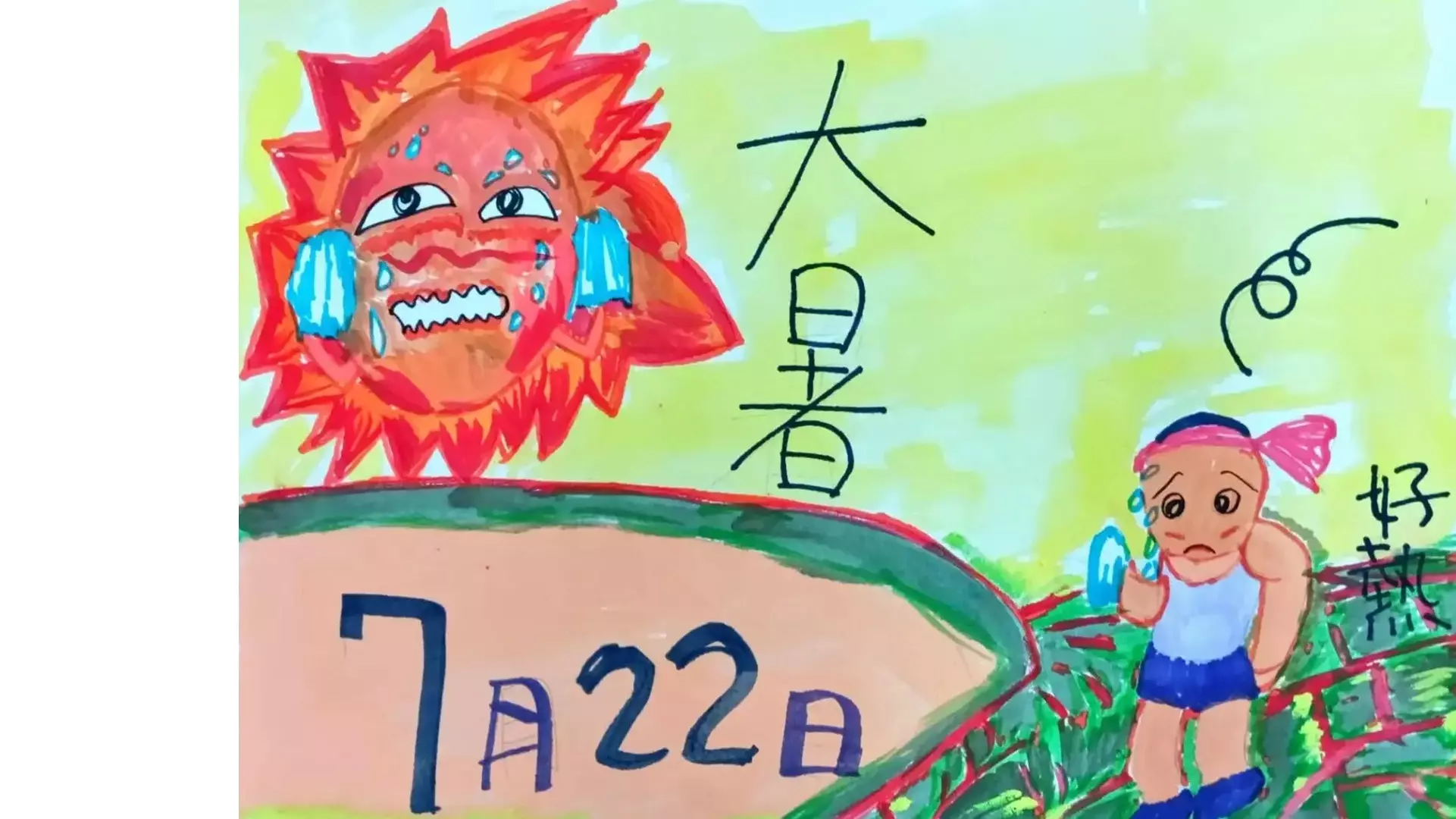
五、大暑綠豆米篩目
Great Heat: Mung Bean Mitaimu
(sweet mung bean with thick rice noodles soup)
台灣位在北半球,「大暑」大約在國曆7月22日-24這幾天。
這時候學生都放暑假了,天氣也炎熱難耐。
大家是不是覺得地球暖化,天氣越來越熱了呢?
熱得沒胃口,這時候吃點清涼解熱的綠豆米篩目最消暑了!
Taiwan is in the Northern Hemisphere, and 'Great Heat' is around July 22nd-24th.
During this time, students are on summer vacation, and the weather is super hot.
Do you think the weather is getting hotter because of global warming?
When it’s getting hot, eating some cool mung bean mitaimu is the best way to stay cool!
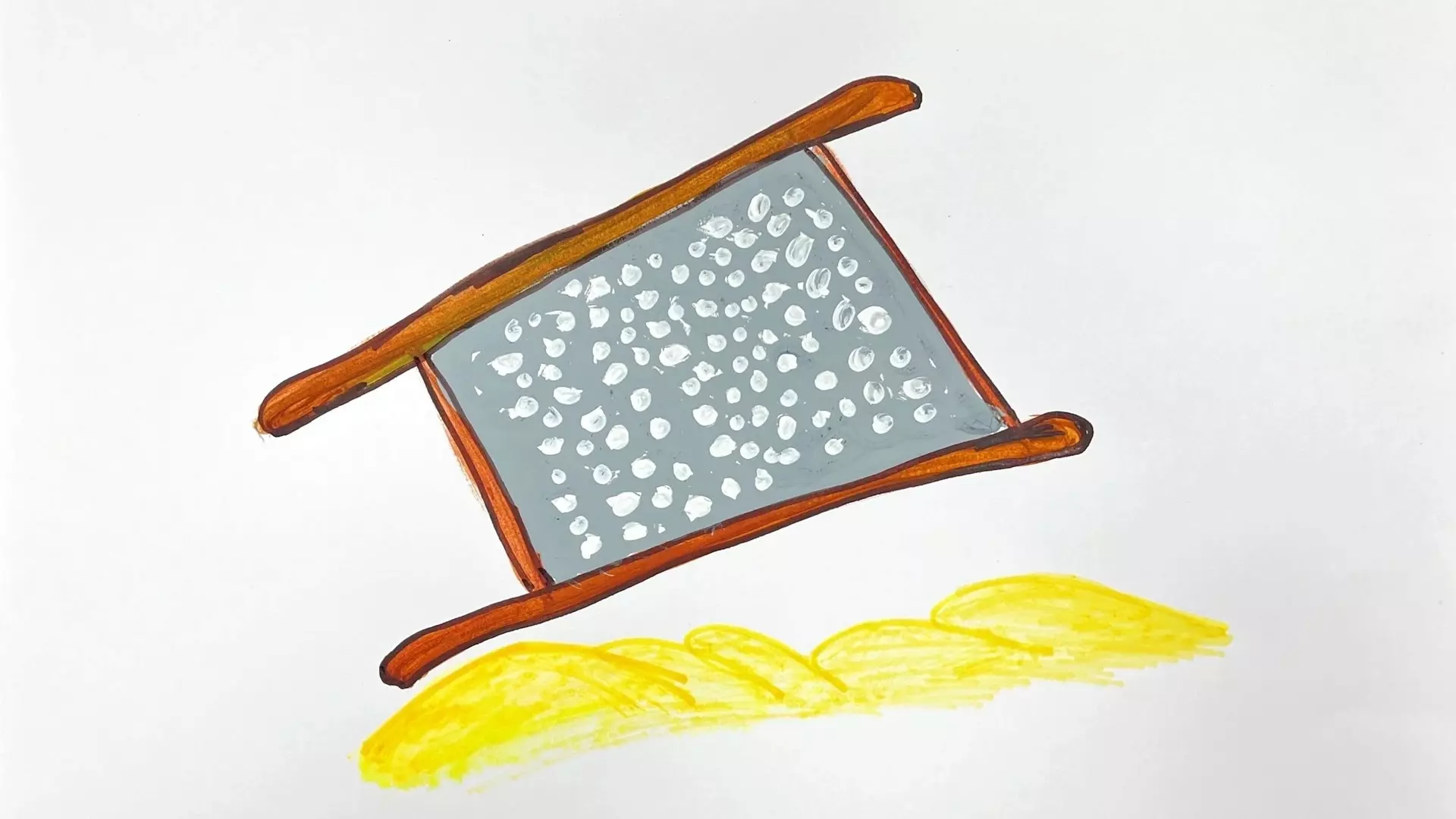
「米篩目」是以台灣傳統的在來米製成,而且會使用「舊在來米」,
因為在來米經過長時間的陳放後,米中水分含量比較低,
較適合拿來做米食加工品。
用等量的在來米和太白粉加水混合,然後用壓、搓的方式做成條狀,
在一般的麵食攤上,經常可以看到。
'Mung bean mitaimu ' is made from traditional Taiwanese Indica rice(Zailai rice), and they use 'old Zailai rice'
because it has less water content and is better for making processed rice products.
Use equal parts of rice and cornstarch mixed with water, then press and knead to form strips,
which can often be seen at regular noodle stalls.
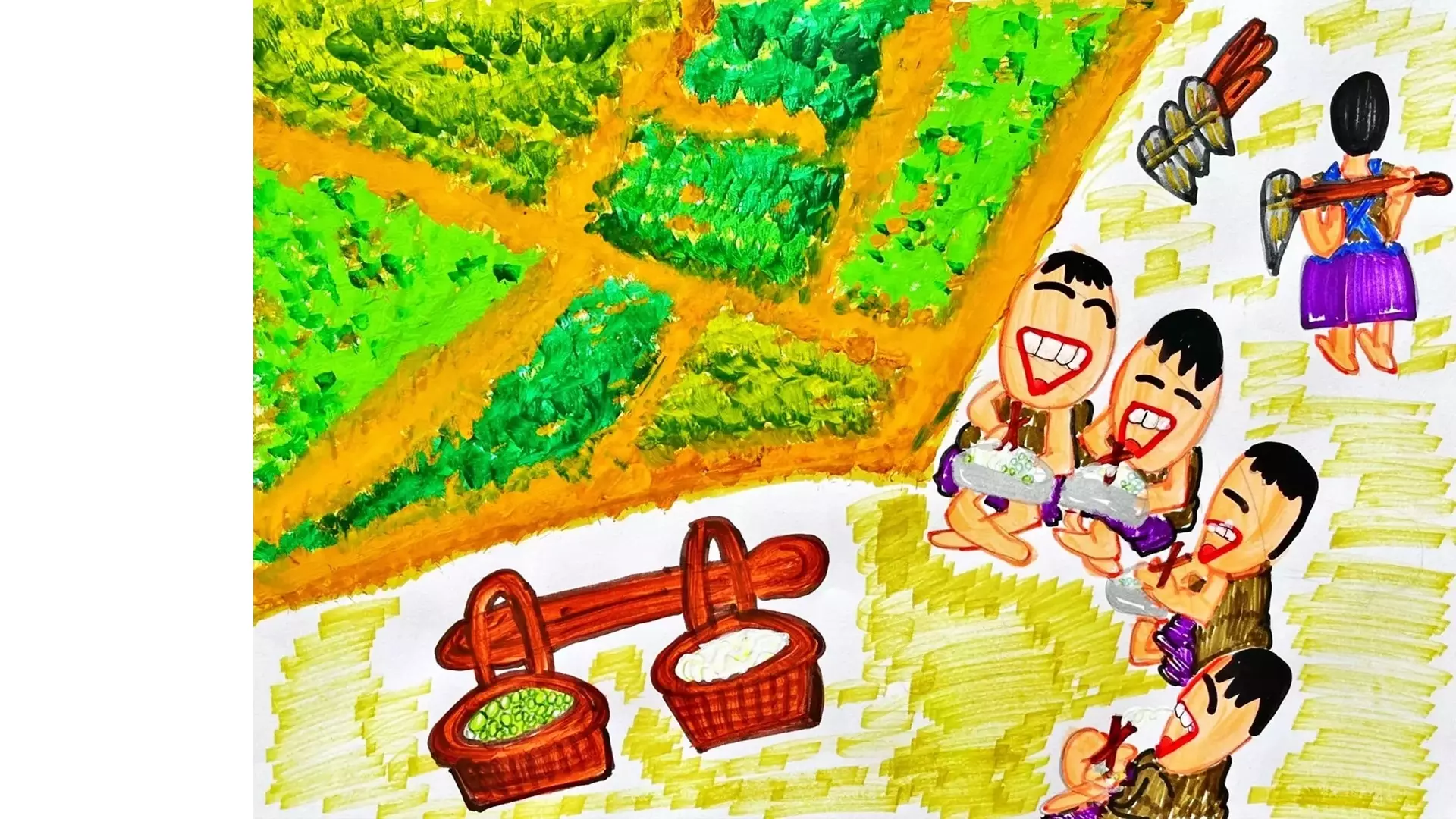
米篩目早期是務農人家補充體力的點心,在台灣有兩種吃法:
一種是加入油蔥、肉末、韭菜等配料煮成鹹的;
或是簡單搭配剉冰、糖水,就能呈現冰冰涼涼、甜滋滋的好味道,是夏天最消暑的小點心了。
In the past, farmers ate mitaimu noodles to get energy.
In Taiwan, there are two ways to enjoy them: one is adding fried shallots, minced meat, and chives to make it salty,
the other is mixing it with shaved ice and syrup to make it sweet and cool – perfect for summer!
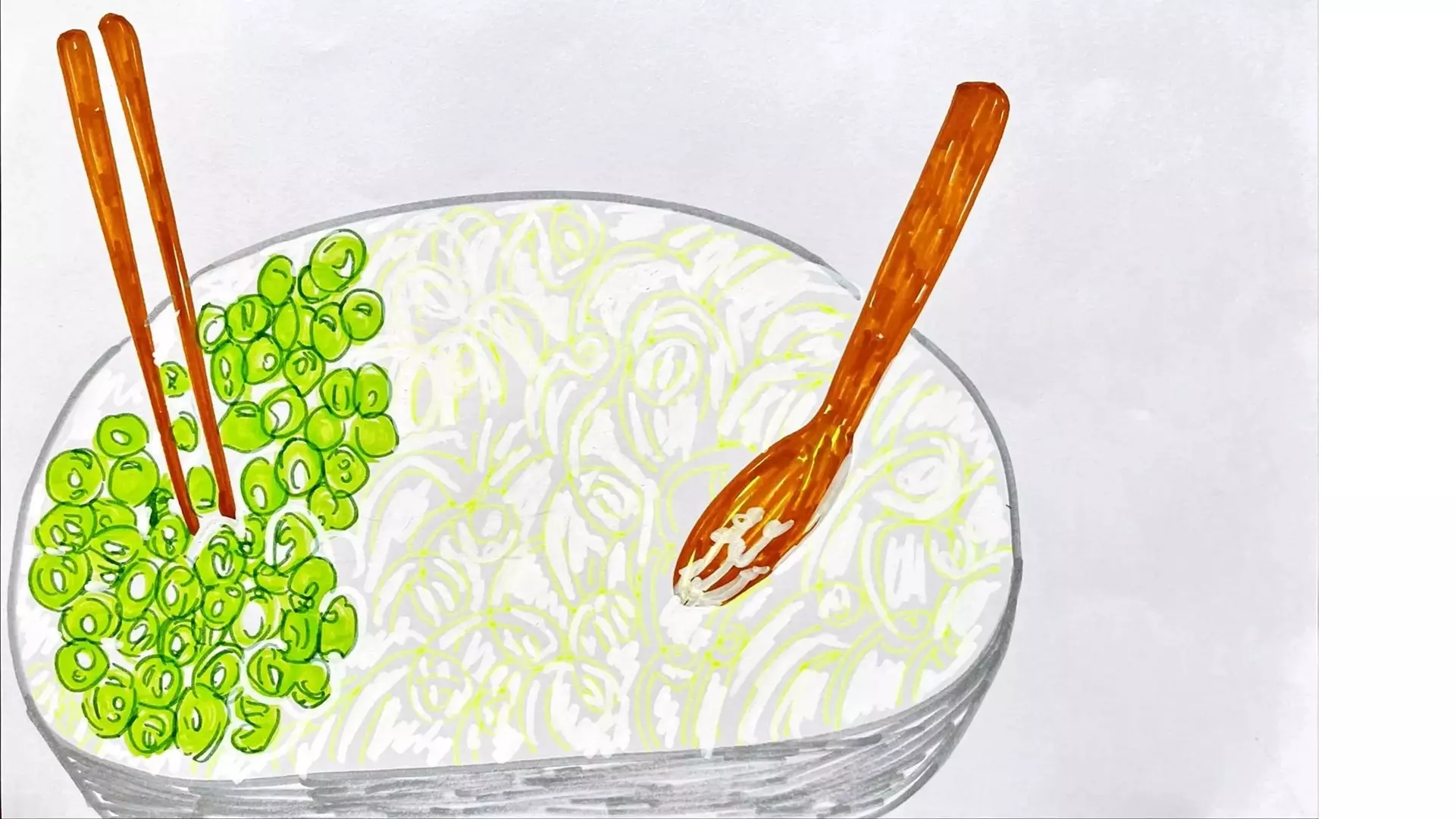
如今加點美食創意,也能變成或甜或鹹的道地小吃。
不管是糖香伴著米香,或是濃郁的油蔥香,這種樸實的滋味,
嘗上一口,就是令人難以忘懷的台灣平民小吃。
來一碗米篩目吧! 你愛吃甜的還是鹹的?
Nowadays, with a bit of creativity, it can become a sweet dessert or salty local snack.
Whether it’s the sweetness paired with the fragrance of rice, or the strong flavor of fried shallots,
this simple taste is an unforgettable Taiwanese street food.
How about a bowl of mung bean mitaimu? Do you prefer it sweet or salty?
感謝收看
下一章,臘月初八 八寶粥
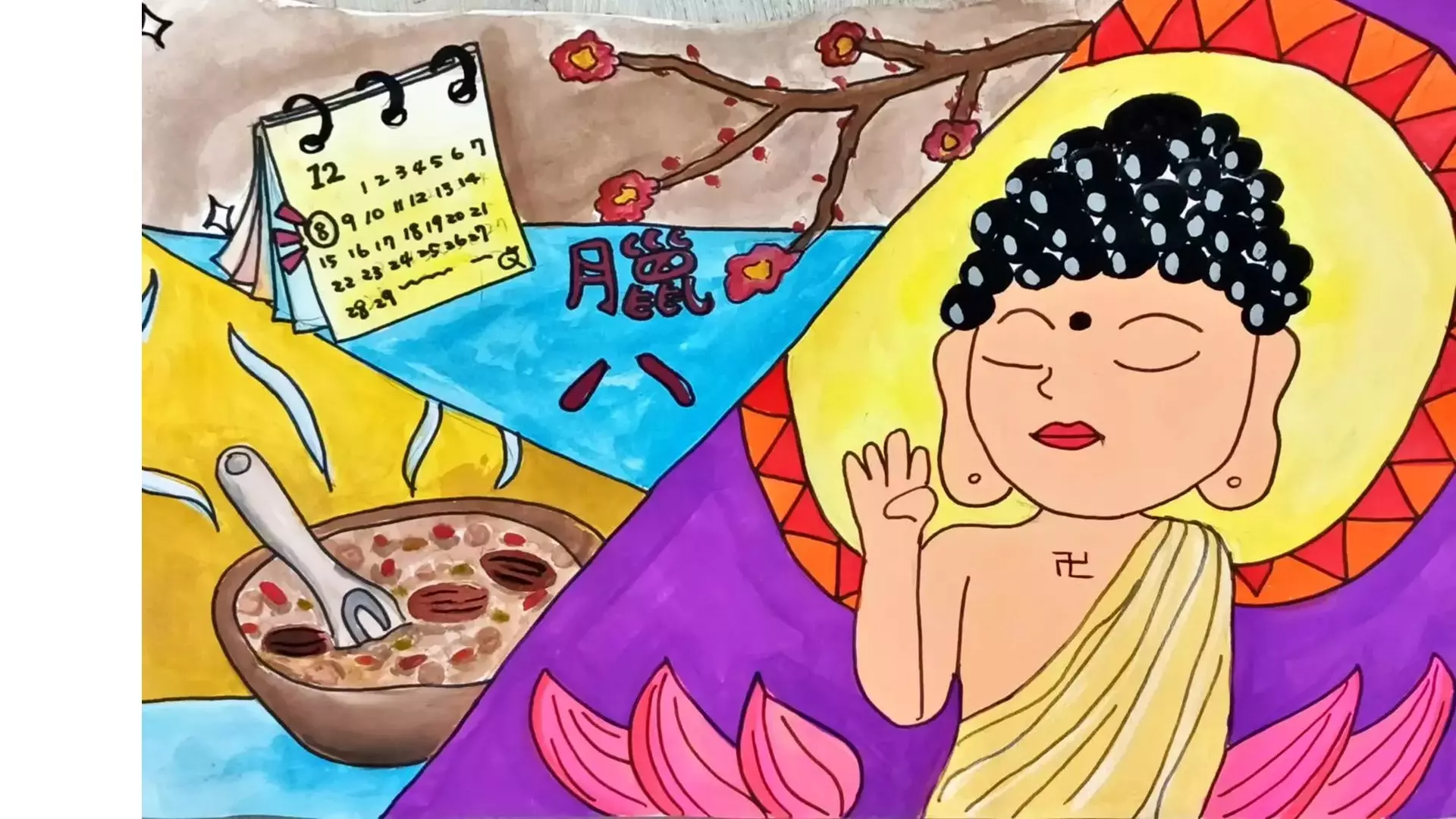
六、臘月初八 八寶粥
Eighth Day of the 12th Lunar Calendar: Eight Treasure Porridge
農曆十二月,是一年中最後一個月。
【臘】,是遠古在十二月,會祭拜神明及祖先,祈求豐收吉祥和避邪的活動。
所以農曆十二月又稱「臘月」。
In the lunar calendar, December is the last month of the year.
Long ago, people worshipped gods and ancestors in December to pray for a good harvest and to keep away evil,
so December is called 'Làyuè'.
農曆十二月初八,簡稱「臘八」,是釋迦牟尼佛成道日,
這天是佛教徒的盛大節日。
民間會用雜米、豆糧煮成粥來祝賀,稱為【臘八粥】。
臘八粥,又稱佛粥,但不一定真要有八種食材,材料也沒有一定喔!
口味可以做成甜的,也可以做成鹹的喔!
On the 8th day of this month, known as 'Làbā', Buddhists celebrate the day when Buddha Shakyamuni attained enlightenment.
People prepare porridge with different grains and beans to commemorate this occasion, referred to as 'Làbā Porridge'.
Làbā Porridge, also known as Buddha Porridge, doesn't have to contain exactly eight ingredients; it can be made sweet or savory!
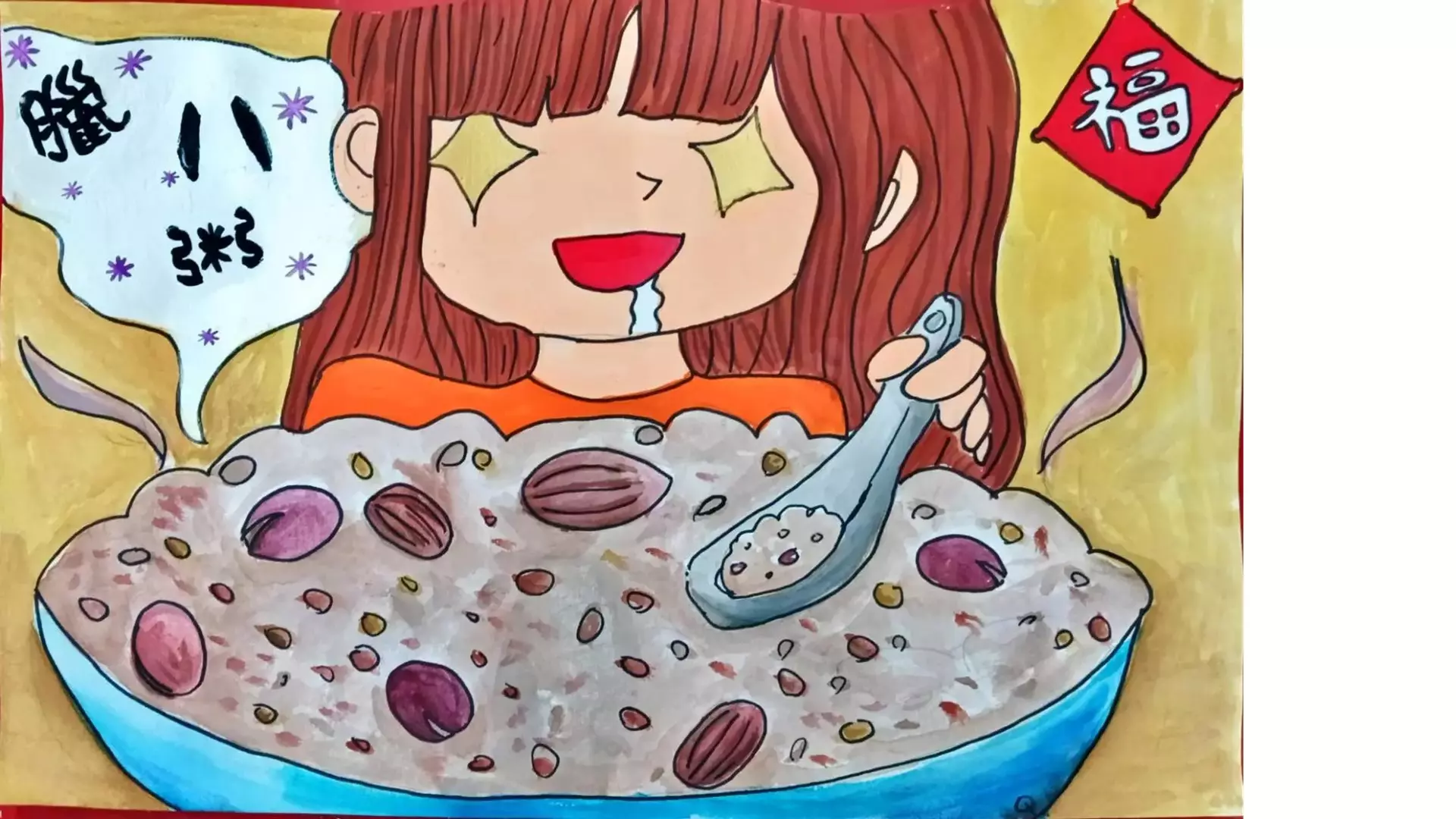
在寒冷的冬天,來一碗暖呼呼的臘八粥,可以驅寒暖身、增添體力。
一些地區也有將臘八粥分送親友的風俗,用以表達關愛和祝福。
During the cold winter, a warm bowl of Làbā Porridge can help keep you warm and strong.
In some areas, it is also a tradition to share this porridge with friends and family to express love and blessings.
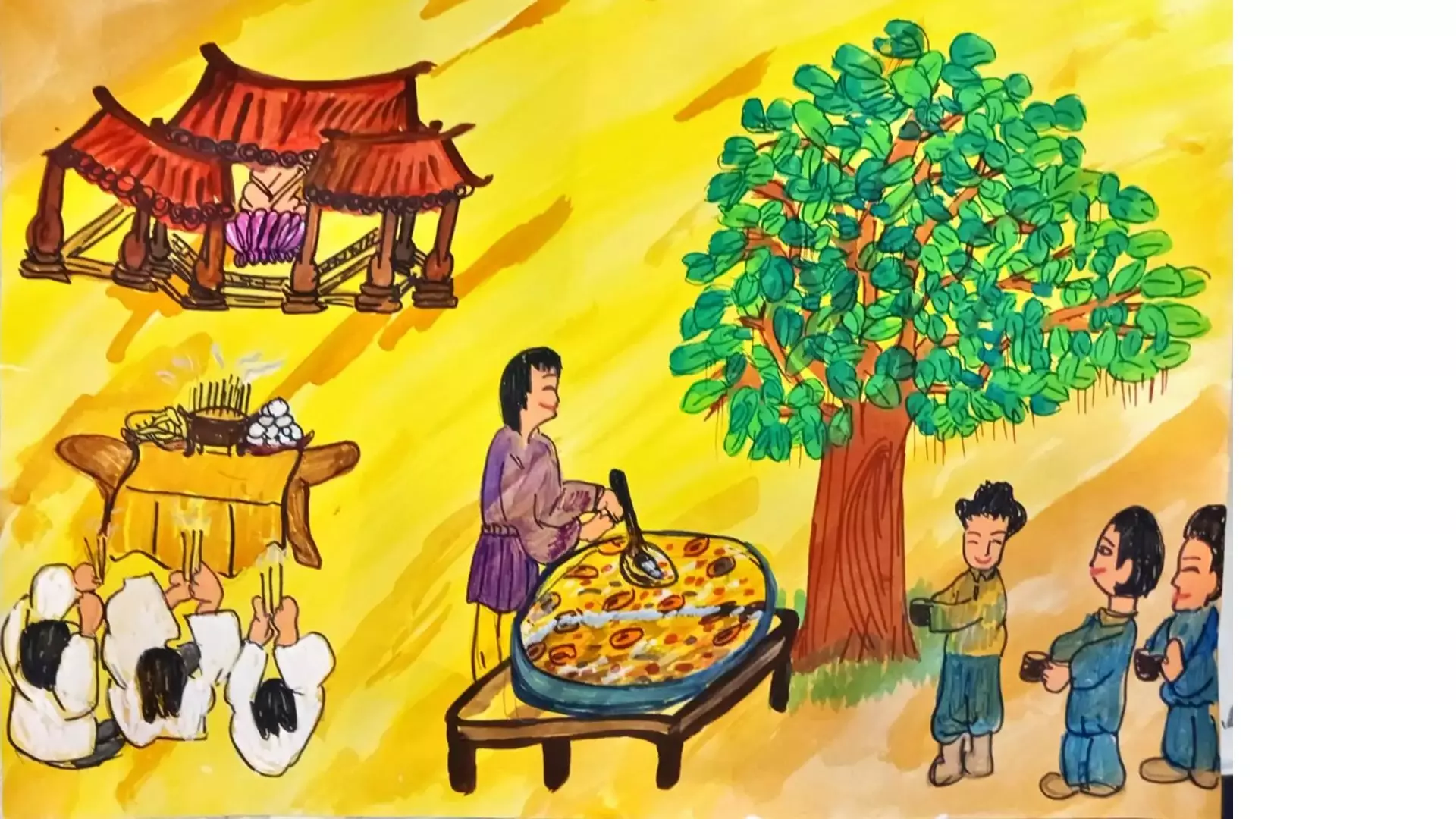
你是否有注意到?每年學校在這一天都會收到附近寺廟提供的臘八粥?
嘗一口經過許多人溫暖加持的臘八粥,也期許自己能帶給大家溫暖與歡喜!
來看看學校今年我們自己煮的臘八粥,放了哪些豐富美味的食材呢?你認得幾種呢?
Have you noticed? Every year on this day, schools get Làbā Porridge from nearby temples.
Tasting this porridge, which has been blessed by many people, gives us hope to bring warmth and joy to everyone!
Let's see what yummy ingredients we used to make our own Làbā Porridge this year! How many can you recognize?